
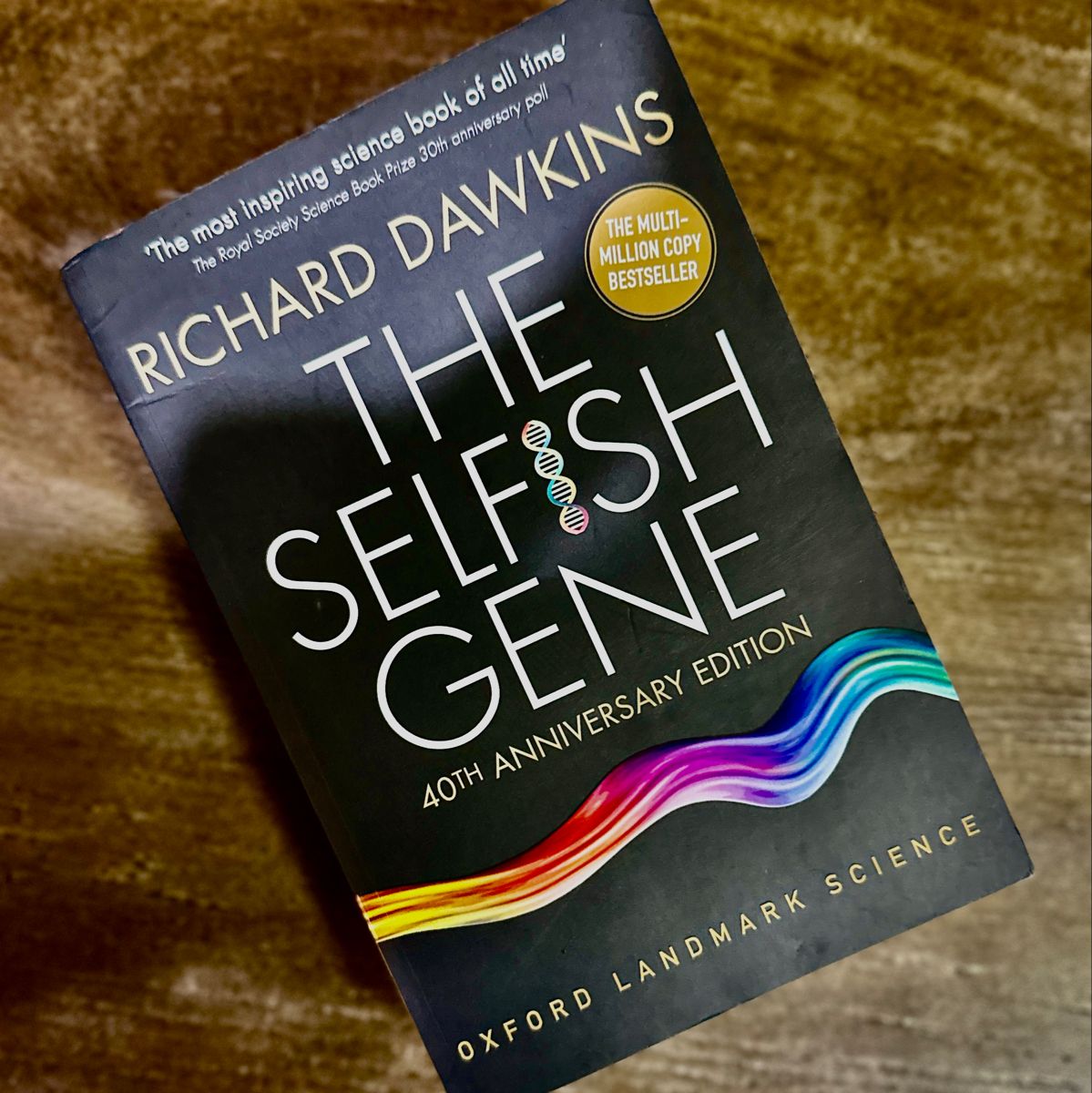
The Selfish Gene is one of the most important and influential science books of the twentieth century, having fundamentally reshaped how scientists and educated laypeople understand evolution. Richard Dawkins argues that natural selection operates primarily at the level of the gene rather than the individual organism, the group, or the species — and that understanding this shift in perspective illuminates many puzzling behaviors that had previously resisted evolutionary explanation.
Dawkins introduces the metaphor of organisms as survival machines — robots blindly programmed to preserve the selfish molecules known as genes. This does not mean that organisms behave selfishly in any moral sense, but that the genes that have survived to the present day are those that were effective at getting themselves passed on to the next generation, often by programming their host organisms with behaviors that serve this end.
The gene-centered view of evolution explains many phenomena that had puzzled biologists, including altruistic behavior among related organisms, the evolution of honest signaling, the dynamics of parent-offspring conflict, and the evolution of aging. Dawkins explains the concept of evolutionarily stable strategies and demonstrates how selfish genes can produce cooperative behavior at the organism level.
Most famously, the book introduces the concept of the meme — a unit of cultural transmission analogous to the gene — which has become one of the most influential and widely used concepts in discussions of culture, ideas, and the internet. The Selfish Gene remains essential reading for anyone who wants to understand modern evolutionary biology and its implications.
Be the first to review “The Selfish Gene by Richard Dawkins”
Related products

Science & Technology
NASA astronaut Mark Watney is stranded alone on Mars and must use science, ingenuity, and a dark sense of humor to survive until a rescue mission can reach him.
Science & Technology
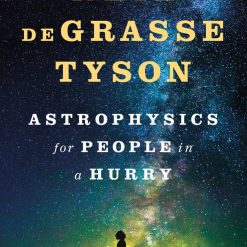
Neil deGrasse Tyson distills the essential concepts of astrophysics into a compact, witty, and accessible guide for curious readers who want cosmic perspective without the physics degree.
Science & Technology
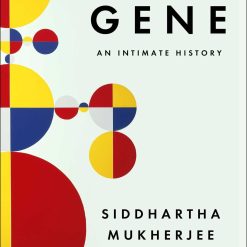
Pulitzer Prize winner Siddhartha Mukherjee weaves together the history of genetics, the science of heredity, and the profound ethical questions raised by our growing power to read and rewrite the genome.
Science & Technology
Thomas Kuhn's landmark work on how science progresses through revolutionary paradigm shifts, introducing concepts that permanently changed our understanding of scientific development.
Science & Technology
Stephen Hawking's landmark exploration of the universe — from the Big Bang to black holes to the nature of time — made accessible to general readers without scientific background.

Science & Technology
A definitive biography of John von Neumann, the twentieth century's most important mathematician, whose ideas shaped computers, game theory, quantum mechanics, and nuclear weapons.
Science & Technology
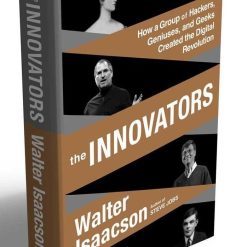
Walter Isaacson tells the story of the digital revolution and the brilliant, collaborative teams that created the computer, the internet, and the world of modern technology.
Science & Technology
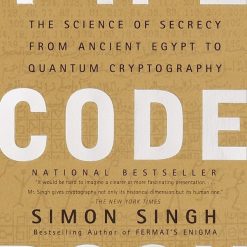
Simon Singh's gripping history of cryptography from ancient Caesar ciphers to modern public-key encryption, told through the greatest code-breaking battles in history.
Reviews
There are no reviews yet.