
Post
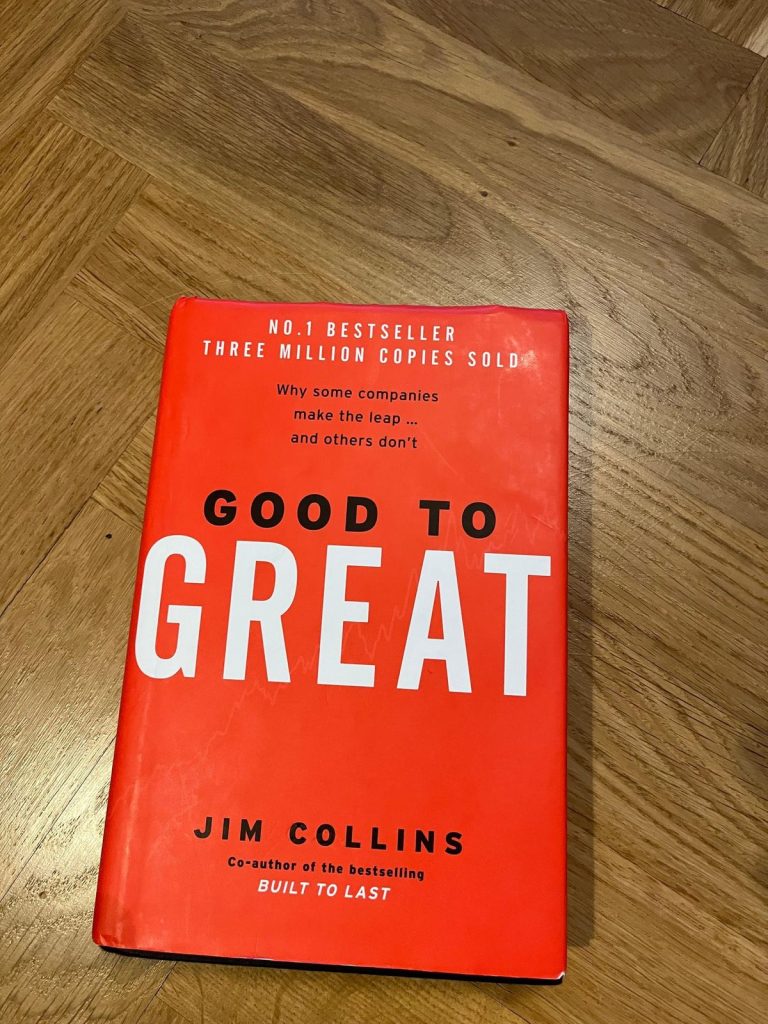
Good to Great Collins: 3 Critical Best Discoveries Behind Companies That Made the Leap
Jun
Good to Great Collins: 3 Critical Best Discoveries Behind Companies That Made the Leap
If you have been looking for a definitive, honest assessment of Good to Great Collins, this review gives you everything you need to decide whether this book belongs on your shelf — and more importantly, how to extract maximum value from it if it does. Books in this category are among the most discussed, most recommended, and most frequently misapplied in their respective fields. Understanding what Good to Great Collins actually argues, as opposed to what popular summaries claim it argues, is the difference between applying its ideas effectively and wasting the investment of time and attention reading requires.
Books have shaped human civilization in ways that no other medium has matched. According to Wikipedia’s article on books, the codex format that underpins the modern book has been the primary vehicle for accumulated human knowledge for nearly two thousand years. Good to Great Collins sits within that tradition — a work that attempts not merely to entertain or inform, but to genuinely change how its readers think, decide, and act. Whether it succeeds in that ambition, and for which readers, is precisely what this review addresses.
Overview and Key Themes of Good to Great Collins
The fundamental argument of Good to Great Collins can be stated simply, but its implications take considerable time to fully absorb. Like all genuinely important books, the surface idea is accessible while the depth rewards extended engagement and repeated return. This review engages with that depth rather than offering a superficial summary that could be assembled from any book description page.
The themes explored in Good to Great Collins connect to fundamental questions that serious readers return to across many books and many years. The author’s contribution is not simply to raise these questions — others have done so before — but to provide a framework that is specific enough to generate concrete, actionable guidance while being general enough to apply across the enormous variety of individual circumstances that readers bring to their engagement with the text.
What distinguishes Good to Great Collins from less successful books in its category is the quality of the evidence marshalled in support of its central claims. Rather than relying primarily on anecdote or rhetorical force, the author builds the argument on a foundation that can withstand genuine scrutiny — which is why the book continues to earn new readers long after its initial publication.
About the Author Behind Good to Great Collins
Understanding the author’s background and the intellectual journey that produced Good to Great Collins provides essential context for evaluating the book’s claims. Authors who write from direct experience — whether as practitioners, researchers, or both — bring a different quality of insight than those synthesizing others’ work at a distance. The credibility of Good to Great Collins is partly a function of who is making its arguments and what qualifies them to make them.
The author’s body of work before and after Good to Great Collins also illuminates the book’s position within a larger intellectual project. Books are rarely standalone events in an author’s career — they represent a particular crystallization of thinking that continued developing before publication and has continued evolving since. Readers who engage with this context find that Good to Great Collins gains additional depth and that the ideas connect more richly to a broader understanding of the field.
Core Ideas and Arguments in Good to Great Collins
The central thesis of Good to Great Collins challenges conventional wisdom in ways that initially feel counterintuitive but ultimately prove more accurate than the assumptions they replace. This pattern — discomfort followed by recognition — is characteristic of the most enduring ideas in their respective fields. The author of Good to Great Collins understands that genuinely useful insights are rarely the ones that confirm what readers already believe.
The supporting framework built around the central thesis is where Good to Great Collins earns its enduring relevance. Rather than a single memorable idea that fades once novelty wears off, the book constructs a coherent system of interlocking concepts that readers can continue applying to new situations years after their first reading. This systemic quality explains why Good to Great Collins generates repeated re-reading in a way that simpler books do not.
Key concepts introduced in Good to Great Collins have entered the vocabulary of their respective fields to such an extent that readers encountering them in other contexts are often unaware of their origin. This kind of conceptual diffusion is the clearest evidence of a book’s genuine influence — ideas so useful they become part of how practitioners think, even when the original source is forgotten. For more expert book reviews and reading guides across every category, visit our complete book review collection at btcpro.
Key Lessons and Takeaways from Good to Great Collins
The most practically valuable insights from Good to Great Collins can be organized into several categories that correspond to the different contexts in which readers will want to apply them. Whether you are approaching Good to Great Collins from a professional perspective, a personal development perspective, or a purely intellectual one, the lessons organize differently — and this flexibility is one of the book’s genuine strengths.
- The primary framework: The central organizational structure of Good to Great Collins provides a lens for categorizing situations and generating appropriate responses. Once internalized, this framework changes how you process information in your field in ways that remain active long after the initial reading experience fades.
- The diagnostic tool: A subset of the book’s ideas function as diagnostic instruments — ways of identifying where current approaches are failing and why. The author of Good to Great Collins is particularly strong in helping readers identify the gap between what they think is causing their results and what is actually causing them.
- The implementation guidance: Unlike many books that excel at identifying problems while offering vague solutions, Good to Great Collins provides specific enough implementation guidance to allow readers to begin changing behavior within days of completing the text. This practicality distinguishes it from more theoretically oriented works in the same space.
- The mental model: Perhaps the most lasting contribution of Good to Great Collins is a new mental model — a way of thinking about a domain that, once adopted, makes a wide range of previously confusing situations suddenly comprehensible. Mental models of this quality are rare and constitute the most valuable intellectual content any book can provide.
- The motivational architecture: The book also contributes to the reader’s motivational framework — not through empty exhortation, but through evidence and argument that reshape what readers believe is possible for them specifically.
Critical Reception and Limitations of Good to Great Collins
No honest review of Good to Great Collins can ignore the substantial body of criticism the book has attracted alongside its praise. Understanding both sides of the conversation about Good to Great Collins makes you a better-equipped reader and a more sophisticated user of its ideas.
The strongest criticism leveled at Good to Great Collins typically centers on the gap between the quality of the central ideas and the quality of the evidence supporting them. In some cases, critics argue that the anecdotal or case-study evidence selected to support the argument is not representative and that the claims made generalize beyond what the evidence can support. These are legitimate methodological concerns that readers should hold alongside their appreciation for the book’s insights.
A second category of criticism concerns the book’s relationship to complexity. The best ideas in Good to Great Collins are genuinely nuanced, but the format of popular nonfiction sometimes requires simplification that strips away important qualifications. Readers who engage only with the headline claims risk misapplying ideas that function correctly only in their full nuanced form. The responsible reading of Good to Great Collins requires holding this tension consciously.
Who Should Read Good to Great Collins
Good to Great Collins is not for every reader, and claiming otherwise would be a disservice to the book and to potential readers. Identifying the reader profile for whom Good to Great Collins will deliver maximum value requires honest assessment of both the book’s content and the conditions under which ideas of this type produce real change.
The ideal reader for Good to Great Collins is someone at a genuine inflection point — professionally, intellectually, or personally — who is actively seeking frameworks rather than simply entertainment. Readers who engage with the book as a challenge to their current assumptions, rather than a confirmation of them, will extract the most value. Those who read Good to Great Collins looking for endorsement of what they already believe tend to find it, but miss the more valuable disruptive content that produced the book’s reputation.
Readers who have already engaged deeply with the subject area may find that Good to Great Collins covers familiar ground in some sections while offering genuine novelty in others. For this audience, the book’s value lies in its synthesis and its particular framing of ideas rather than in their first introduction. A focused re-reading with attention to the sections that initially seemed least relevant often produces the most significant insights for experienced readers.
Comparison With Similar Books in the Field
Placing Good to Great Collins in the context of comparable books helps calibrate where its unique contribution lies and where readers might supplement it with alternative perspectives. No single book covers any important topic completely, and the most sophisticated readers build their understanding from multiple sources that challenge and complement each other.
Compared to its closest predecessors in the field, Good to Great Collins offers a more accessible entry point for readers without deep domain expertise while maintaining enough intellectual substance to satisfy readers with serious backgrounds. This accessibility-without-condescension is genuinely difficult to achieve and represents one of the author’s most significant accomplishments as a communicator.
Compared to contemporaries addressing similar questions, Good to Great Collins distinguishes itself through the quality of its examples and the coherence of its overarching framework. Where competing books often feel like collections of related insights without a unifying architecture, Good to Great Collins builds toward a comprehensive position that becomes more persuasive as the reader progresses. For a complete guide to the best books across every category, explore our btcpro curated book review library.
How to Apply the Ideas from Good to Great Collins Today
Understanding the ideas in Good to Great Collins and actually changing behavior in response to them are two very different achievements. The gap between intellectual appreciation and real-world application is where most readers’ engagement with important books ends prematurely. This section addresses that gap directly.
The most effective approach to applying Good to Great Collins begins before you finish reading it. Rather than treating the book as a complete artifact to be consumed sequentially and then considered complete, approach it as a working document. Identify the two or three ideas that feel most immediately relevant to your specific current situation and focus your initial application efforts there entirely. Attempting to implement all of a book’s insights simultaneously produces the same result as attempting none of them.
The second stage of application involves returning to Good to Great Collins at intervals after your first reading. Ideas that seemed abstract on first reading frequently become concrete and applicable after several months of relevant experience. The book you read the second time is genuinely different from the book you read the first time, because you are bringing different questions and different experiences to the same text. This dynamic is one of the defining characteristics of books worth owning rather than merely reading once.
Frequently Asked Questions About Good to Great Collins
Is Good to Great Collins worth reading if I have limited time?
Yes — the quality-to-investment ratio for Good to Great Collins is high relative to comparable books in its category. Most readers complete it in three to six hours of focused reading and report that the ideas continue generating value for months or years afterward. Few investments of comparable time deliver comparable returns.
Should I read Good to Great Collins before or after related books in the field?
For most readers, Good to Great Collins works well as either an entry point into its subject area or as a synthesizing read after broader exploration. Its internal coherence means it does not require significant background knowledge, but readers with established familiarity with the field will find specific sections more resonant and more challenging than newcomers.
What is the single most important idea in Good to Great Collins?
Reducing any serious book to a single idea inevitably distorts it, but if forced to identify the central contribution of Good to Great Collins, it is the framework through which the author organizes the material — the lens that makes previously unclear situations suddenly interpretable. This framework is what readers most frequently cite as transformative in the long run, even when specific factual claims or case studies are later contested or revised.
Where can I find more reviews and reading guides like this one?
For expert, in-depth reviews of the best books across self-help, business, science, biography, and every other category, visit our btcpro complete book review collection — the most comprehensive English-language resource for serious readers who want to read better, not just more.
Final Verdict on Good to Great Collins
The case for Good to Great Collins rests ultimately on a simple claim: it is a book that changes how its readers think, and thinking differently leads to acting differently, and acting differently leads to different outcomes. This is the standard against which every self-improvement, business, or science book should be measured — not whether it is interesting or well-written, but whether it produces change that endures beyond the reading experience.
By that standard, Good to Great Collins earns its reputation. It is not a perfect book, and this review has not pretended otherwise. But it is a book whose central ideas are sound, whose implementation guidance is concrete, and whose influence on readers who engage with it seriously and repeatedly tends to be substantial. Read Good to Great Collins with skepticism, apply its ideas selectively, and return to it when your circumstances shift — and it will reward you in proportion to the seriousness of your engagement.
